
Most people book a massage because they feel stressed, sore, or simply want to relax. But not all massages are the same. Each type is designed for a different purpose. If you choose the wrong one, your pain might not go away—or you may even feel uncomfortable afterwards.
This guide will help you understand popular massage types like Swedish, deep tissue, remedial, sports, Thai, lymphatic drainage, and trigger point therapy. Once you know the difference, it becomes much easier to choose what your body actually needs.
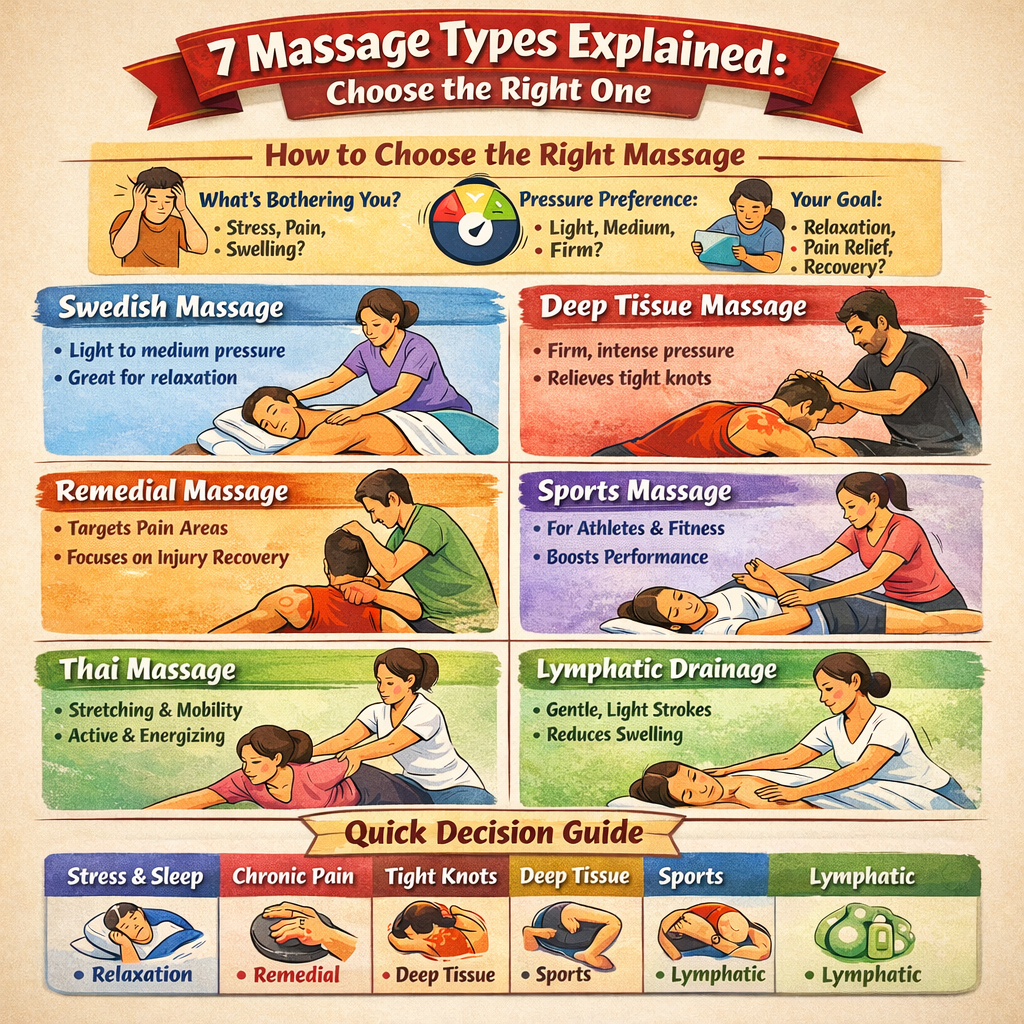
How to Choose the Right Massage (Quick Guide)
Choosing the right massage doesn’t have to be complicated. Just keep these simple points in mind:
- Identify what’s bothering you – stress, pain, stiffness, swelling, or recovery
- Decide how much pressure you prefer – light, medium, or firm
- Think about your goal – relaxation, pain relief, better movement, or recovery
Remember, the best massage is not always the strongest—it’s the one that suits your needs.
1. Swedish vs Relaxation Massage
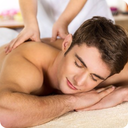
Both of these are gentle and calming, with smooth, flowing strokes.
Swedish Massage:
Uses light to medium pressure along with basic muscle work. It’s great for beginners, mild tension, and overall relaxation.
Relaxation Massage:
Softer and slower than Swedish. It’s perfect for reducing stress, improving sleep, and helping you unwind mentally.
Choose these if your main goal is to relax—not to treat deep or long-term pain.
2. Deep Tissue Massage
Deep tissue massage focuses on deeper layers of muscle using slow, firm pressure.
- Best for: Chronic tension, tight shoulders, and stubborn knots
- Feels like: Strong but controlled pressure
- Note: You may feel a bit sore the next day, which is normal
Avoid this type if you have sharp pain or a recent injury.
3. Remedial Massage
Remedial massage is more focused and treatment-based.
- Targets specific problem areas instead of the whole body
- Helps with ongoing pain and limited movement
- Often includes deeper pressure and muscle assessment
It’s a good choice for long-term issues like neck, shoulder, or back pain.
4. Sports Massage
Sports massage is designed for active people and recovery.
- Helps muscles recover faster
- Improves flexibility and performance
- Can be done before or after workouts
It’s ideal for athletes, gym-goers, or anyone dealing with muscle fatigue.
5. Thai Massage
Thai massage is quite different from traditional styles. It combines pressure with stretching and movement.
- Includes assisted stretching and body positioning
- Improves flexibility and mobility
- Helps reduce stiffness from sitting or travelling
Choose this if you want a more active experience, not just lying still.
6. Lymphatic Drainage Massage
This is a very gentle massage that focuses on improving fluid movement in the body.
- Uses light, rhythmic strokes
- Helps reduce swelling and heaviness
- Leaves you feeling lighter and refreshed
It’s not suitable if you prefer deep pressure or need treatment for muscle knots.
7. Trigger Point Therapy
This technique focuses on specific tight spots (knots) that cause pain in other areas.
- Targets the exact points that create referred pain
- Provides focused relief rather than full relaxation
- Uses firm, controlled pressure
Best for headaches, neck pain, and localised muscle tension.
Simple Decision Rule
Still unsure? Use this quick guide:
- Stress or sleep problems → Relaxation or Swedish massage
- Ongoing pain → Remedial massage
- Deep knots → Deep tissue or trigger point therapy
- Workout recovery → Sports massage
- Stiff body → Thai massage
- Swelling or heaviness → Lymphatic drainage massage
Final Thoughts
Choosing the right massage can make a big difference in how you feel afterwards. Instead of guessing, take a moment to understand your goal and communicate clearly with your therapist.
A well-matched massage doesn’t just help you relax—it helps your body recover and feel better for longer.